Skip to content

Elite Company Alanya

DPF cleaning in Alanya

Clogged diesel particulate filter? We clean it in about an hour with water, pressure and air, and measure before and after the cleaning.

When does DPF cleaning make sense?

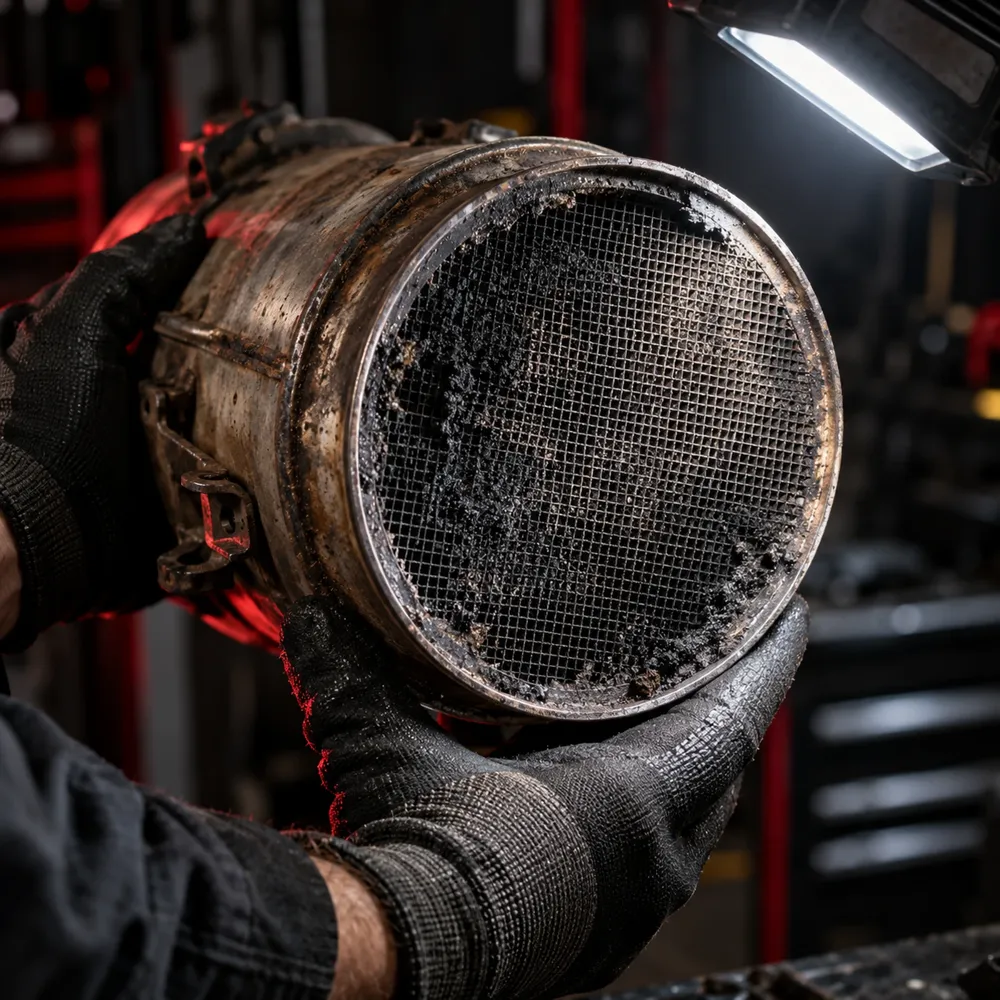
If the engine warning light is on, the car loses power or goes into limp mode and the filter regenerates often, it is frequently clogged. Before you buy a new filter, it is worth trying a cleaning. If the filter is mechanically damaged, for example cracked or melted, it has to be replaced.
What you get

Cleaning in two phases, measurement and report before and after, about one hour and a 12-month warranty. For cars, trucks, buses and construction machinery.

02 / Symptoms

Your filter may be clogged

If any of these sound familiar, bring your car in.

Warning lights you will know

  • Engine warning lightLights up or flashes amber on the dashboard. There are many possible causes, including a clogged filter.
  • Particulate filter lightShows that the filter is full or regeneration is not working. If it stays on, have it checked soon.

What is your vehicle doing? Please select:

This is preliminary information, not a remote diagnosis. The actual condition only shows when measured on the vehicle.

05 / Process

A clean filter in 6 steps

  1. 1
    Inspect

    Inspect

    The filter is removed and its condition is examined.

    First the filter is removed and inspected inside and out. We see how heavily it is loaded with soot and ash and whether it is mechanically damaged, for example cracked. That way it is clear beforehand whether a cleaning is worthwhile.

  2. 2
    Measure

    Measure

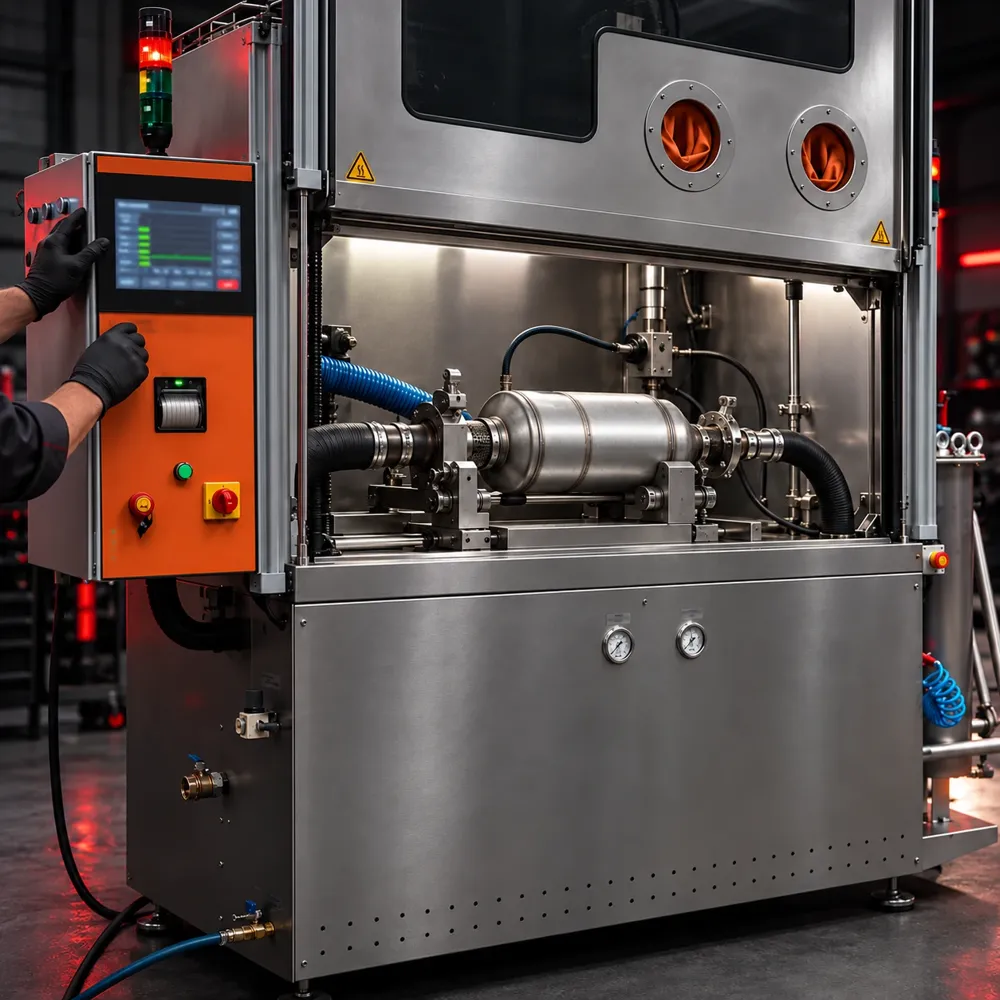
    Exhaust back pressure and flow are measured before cleaning.

    Before cleaning we measure exhaust back pressure and flow. These starting values show how clogged the filter is and serve as the comparison later.

  3. 3
    Cleaning phase 1

    Cleaning phase 1

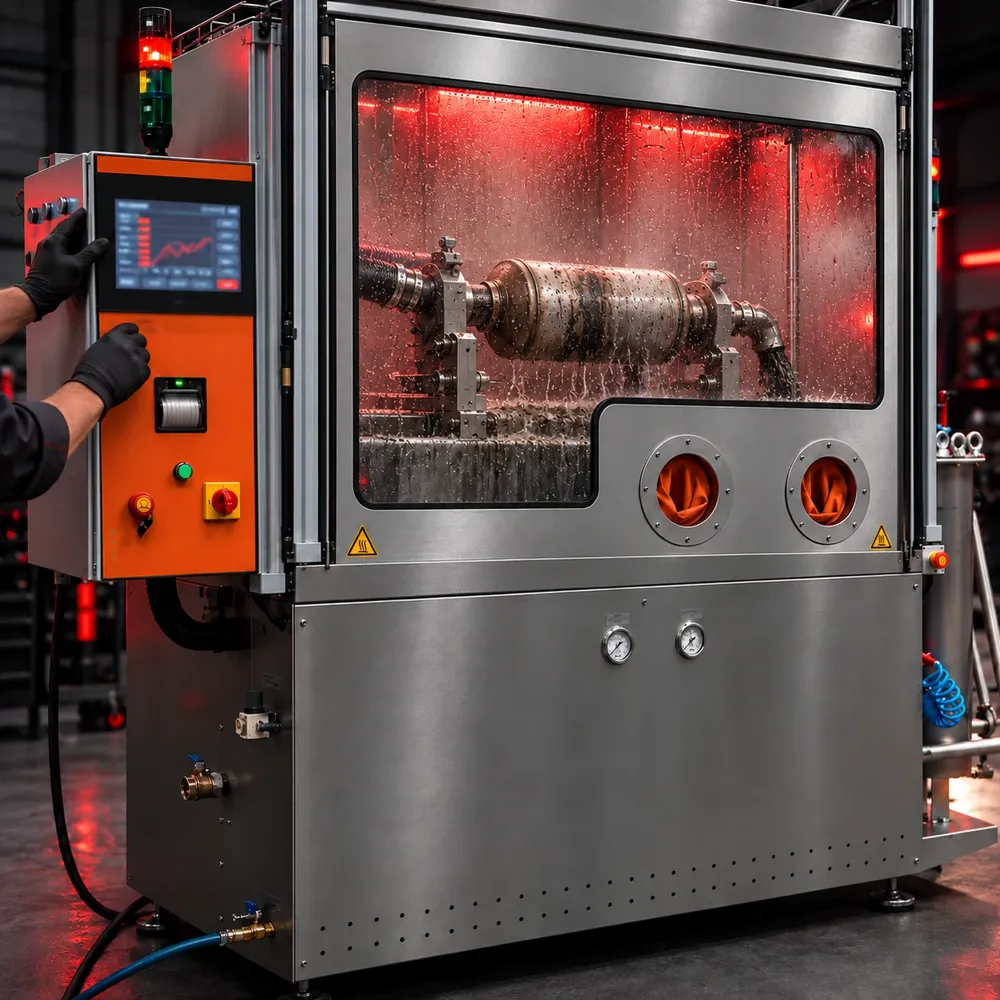
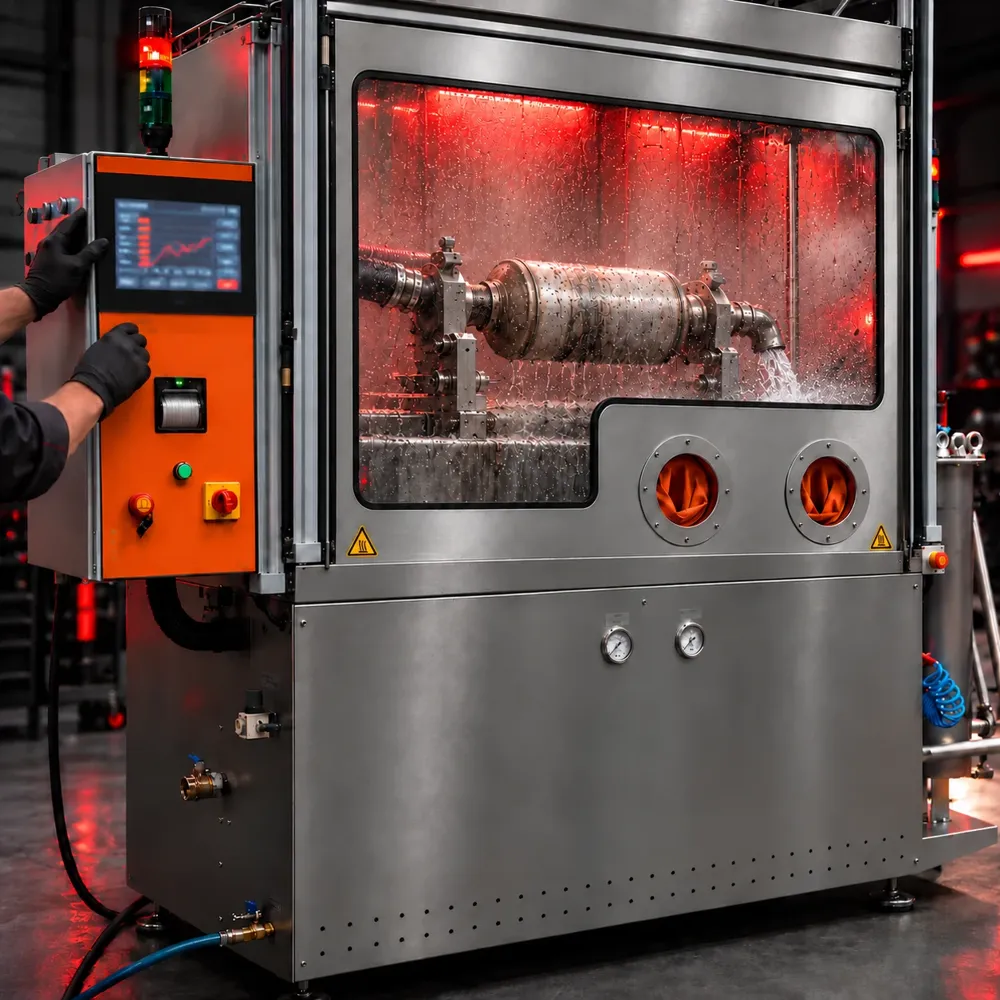
    The filter is cleaned in the closed cabinet in the first phase.

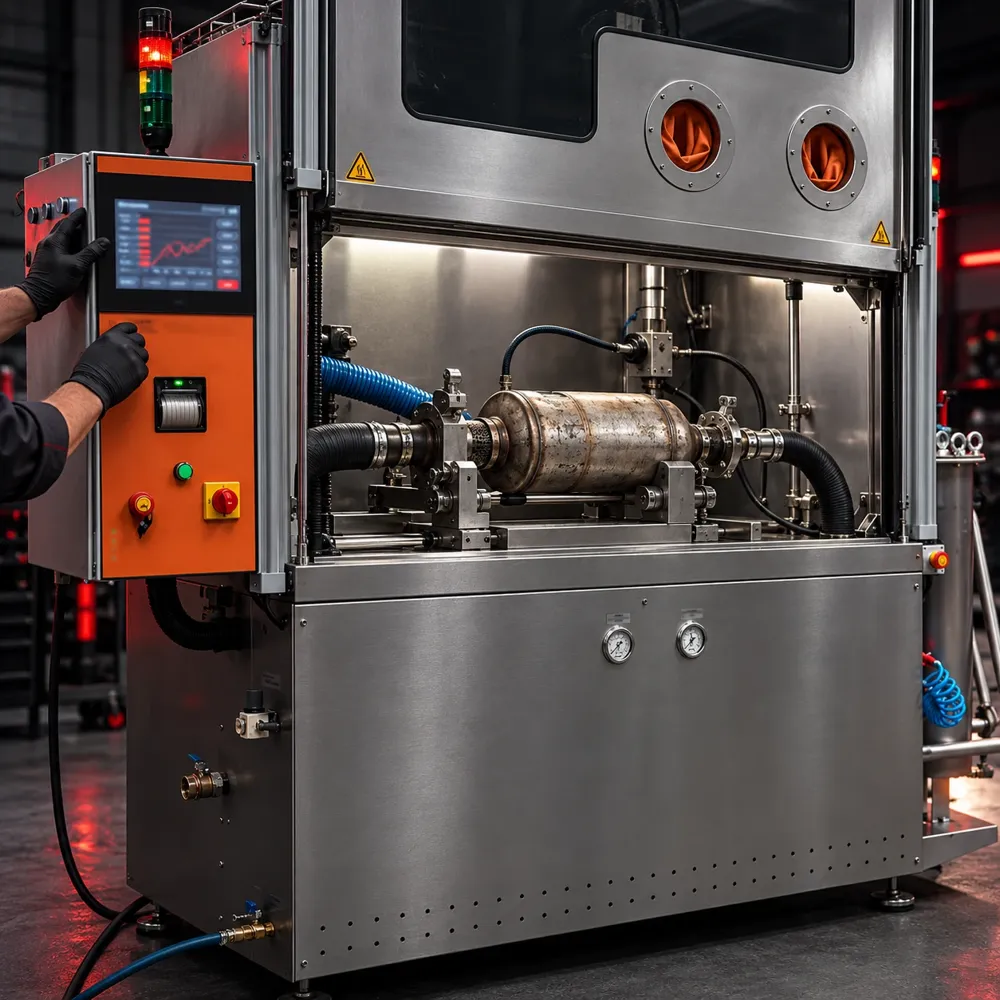
    The filter goes into our closed cleaning cabin. There it is treated with water, pressure and air to loosen soot and loose deposits and rinse them out.

  4. 4
    Cleaning phase 2

    Cleaning phase 2

    In the second phase the rinse water runs increasingly clear.

    In the second phase the filter is rinsed again. The rinse water becomes increasingly clear, a sign that less and less residue is coming out of the channels.

  5. 5
    Measure again

    Measure again

    The measurement is repeated after cleaning.

    After cleaning we measure back pressure and flow once more, so the condition can be compared directly with the starting values.

  6. 6
    Report

    Report

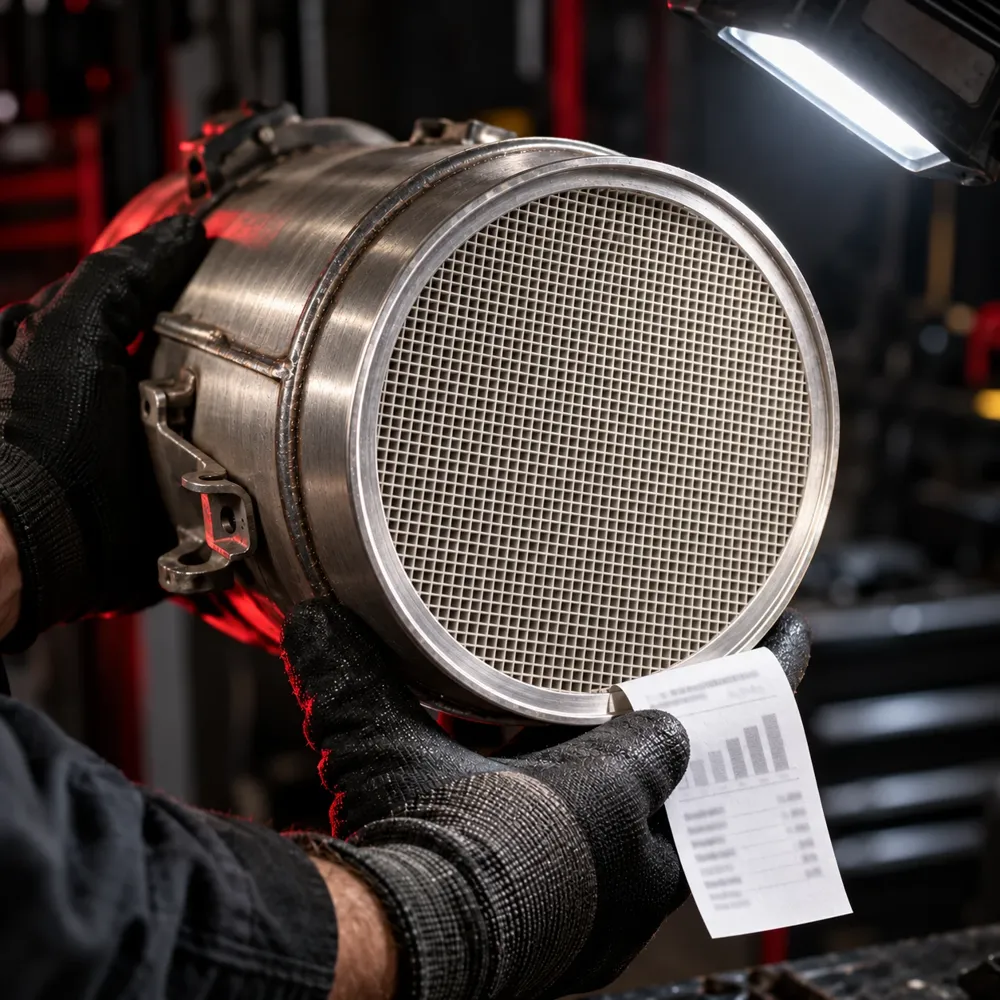
    Before and after values (mbar and m³/h) are recorded in a report.

    We record all values before and after (in mbar and m³/h) in writing in the report. That makes the result traceable.

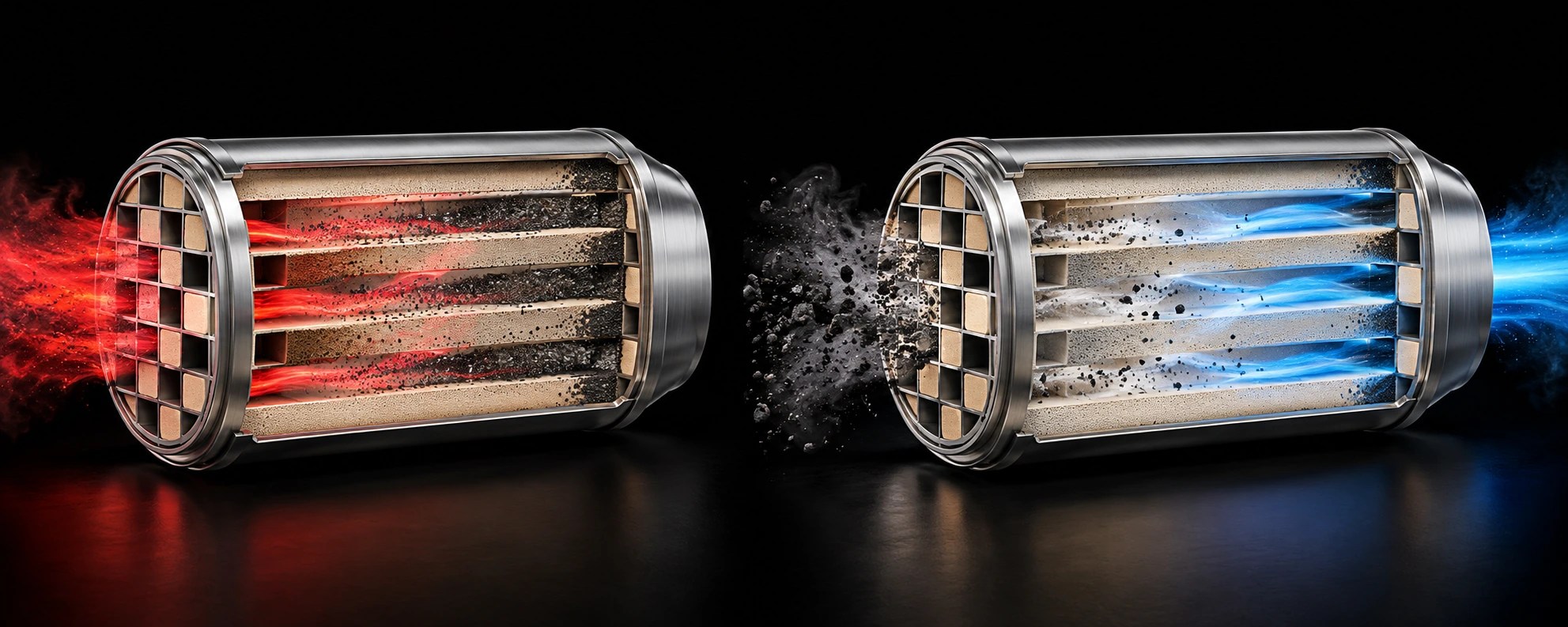
Illustration: clogged and clean filter channels.

Clean instead of replace

Why cleaning is often the better choice

If the filter no longer burns itself clean, waiting gets expensive.

  1. The filter no longer burns itself clean

    When it is heavily clogged, regeneration can no longer run properly. If the problem continues, the ceramic in the filter can crack or even melt from the high temperatures. After that, not even a cleaning helps.

  2. A new filter costs many times more

    Depending on the vehicle, a new part is much more expensive than a cleaning. Fitting and removal come on top, and often further follow-up costs.

  3. Cleaning from €80

    A professional cleaning with measurements before and after usually costs only a fraction. We give you the exact price for your vehicle on WhatsApp.

Request a price for my vehicle

Guide price, depending on vehicle and condition.

04 / Difference

Why remove it and clean it in the machine?

Additives in the tank or flushing the filter while it is still fitted sound convenient, but they miss the real problem: ash and deeply embedded soot.

Additives and pour-in cleaners

  • Can help soot burn off more easily.
  • Ash does not burn and hardly dissolves, so it stays in the filter.
  • The effect depends on driving and temperature, and no result is measured.

Flushing or foaming while fitted

  • The liquid may not reach every channel evenly.
  • Loosened dirt and chemicals can partly stay in the exhaust system.
  • Sensors and catalyst come into contact with the chemicals.
  • You cannot see inside the filter, so the result is hard to verify.
The Elite method

Removal and cleaning in the machine

  • Once removed, the filter is accessible from both sides.
  • Cleaning runs with water, pressure and air in a closed cabinet.
  • Its condition can be checked before and after cleaning.
  • Sensors and catalyst are left untouched.

Additives can be useful as prevention, but they usually will not get a heavily clogged filter clean.

How the filter is built, and how we clean it

A particulate filter is not a simple pipe with the exhaust flowing straight through. It is a wall-flow filter with many narrow, winding chambers. That is why the direction matters when cleaning.

Cleaning while fittedIn our machine
Left: while fitted, the dirt is pushed in the driving direction towards the closed end of the channels. Right: in our machine we flush from the outlet to the inlet. The dirt leaves the filter where it came in.
  • Exhaust / flow in driving direction
  • Flushing flow in the opposite direction
  • Plug (ceramic)
  • Soot / ash
Left: while fitted, the dirt is pushed in the driving direction towards the closed end of the channels. Right: in our machine we flush from the outlet to the inlet. The dirt leaves the filter where it came in.
  1. 1Channels blocked alternatelyEach channel is plugged at one end: some at the back (inlet channels), others at the front (outlet channels). The exhaust cannot go straight through.
  2. 2Gas must pass through the wallThe exhaust is forced through the porous ceramic wall into the neighbouring channel. That wall is the actual filter.
  3. 3Soot and ash stay in the inlet channelSoot can partly burn off during operation. Ash, mostly from engine oil additives, cannot. It stays in the inlet channels and clogs the filter over time.
InletDriving directionOutlet
Residue in the filter
Cleaning while fitted

If the filter is cleaned while fitted, the flow can push the dirt even deeper into the winding chambers in the driving direction.

InletFlushing directionOutlet
Residue in the filter
In our machine

With the filter removed, we flush from the outlet towards the inlet, against the driving direction. That flushes the dirt out where it came in.

What about burning it out or compressed air?

Some providers burn out the removed filter or blow it out with compressed air. That looks cheaper at first, but it carries risks.

  1. Burning out the removed filter

    Burning out produces very high temperatures and large temperature differences. The ceramic can crack or melt and the coating can be damaged. Ash does not burn and stays in the filter.

  2. Blowing out with compressed air

    Compressed air mainly moves loose dirt and can shift or compact it in the winding chambers. Stuck-on ash often stays behind. There is usually no measurement before and after.

  3. The follow-up costs

    The effect often lasts only a short time. The filter clogs again sooner, the warning light comes back, and in the worst case the filter is damaged and has to be replaced anyway. Then you have paid twice.

07 / Cause

The cause may be elsewhere

To keep the filter from clogging again, these points should be checked too:

    01

    DPF differential pressure sensor

    Measures the pressure before and after the filter. If it reads wrong, the control unit misjudges the loading.

    02

    Exhaust temperature sensors

    They control regeneration. Faulty readings stop the filter from burning off properly.

    03

    Engine oil and oil filter (low-SAPS)

    The wrong oil creates more ash and the filter clogs faster. Low-SAPS oil is required.

    04

    Injectors

    Leaking or coked injectors create more soot than the filter can handle.

    05

    EGR system

    A dirty EGR valve disturbs combustion and raises the soot level.

    06

    Turbo and air system

    Oil loss or lack of air causes incomplete combustion and more residue.

    07

    Oxidation catalyst (DOC)

    Heats the exhaust gas for regeneration. If it is defective, regeneration fails.

    08

    Software and adaptation

    Regeneration strategy and loading values must match the cleaning and are adjusted if needed.

FAQ

Frequently asked questions about DPF and OPF cleaning

What are a DPF and an OPF?

The diesel particulate filter (DPF) traps soot from diesel exhaust, and the petrol particulate filter (OPF) does the same on petrol engines. Over time soot and ash build up in the filter and clog it.

How do I know my filter is clogged?

Typical signs are a lit engine warning light, loss of power or limp mode, higher fuel consumption, and frequent regeneration with smell or smoke.

How long does the cleaning take?

The cleaning takes about one hour.

How does the cleaning work?

We clean in two phases with water, pressure and air in our own machine. We measure the filter before and after and record the values in a report.

Why not just pour in an additive or cleaner?

Additives and flushes mainly act on soot. The ash that collects in the filter over the years usually stays behind. A thorough cleaning with water, pressure and air removes these deposits too.

Is there a warranty?

Yes, we give a 12-month warranty on the cleaning.

Which vehicles do you clean?

Cars, trucks, buses and construction machinery with a DPF or OPF.

Why does my filter keep clogging?

Then the cause is often not the filter itself but, for example, sensors, engine oil, injectors, the EGR system or software. The checklist above shows what we go through with you.

How do I get an appointment?

Message us on WhatsApp or call. Tell us the make, model and symptom and we will get back to you right away.

08 / Contact

Bring your car in or message us

Tell us the make, model and symptom and we'll get back to you right away.

WhatsApp opens with a prepared message. You can review it before sending. Information about your data: Privacy and KVKK notice